Mandibular Advancement Devices vs. Tongue Stabilizing Devices: What's the Difference?
For patients who'd rather not deal with a CPAP mask every night, oral appliance therapy is often the first alternative their dentist brings up. But an "oral appliance" isn't a single device.
Dentists typically choose between two designs: a mandibular advancement device or a tongue stabilizing device, and each keeps your airway open in a different way. If you're exploring sleep apnea without CPAP, it helps to understand how the two compare before your oral appliance therapy consultation.
What Is a Mandibular Advancement Device (MAD)?
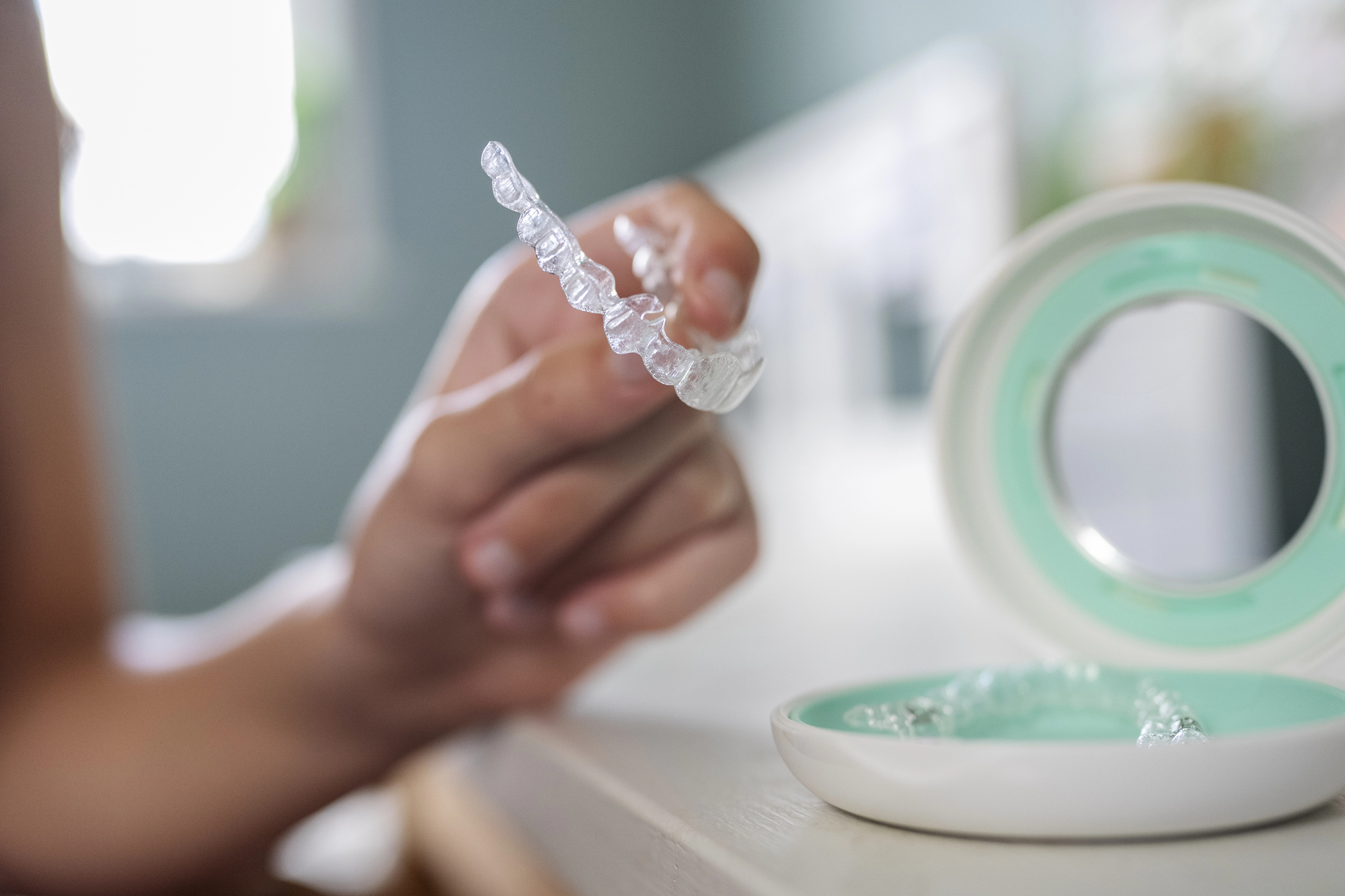
A mandibular advancement device, or MAD, is the most widely prescribed type of oral appliance for obstructive sleep apnea. It fits over your upper and lower teeth like a two-piece mouthguard and gently holds your lower jaw in a slightly forward position throughout the night.
That small shift keeps the base of your tongue and the soft tissue in your throat from collapsing backward and blocking your airway. Most MADs are also adjustable, so your dentist can fine-tune how far forward the jaw sits as you get used to wearing it.
Who MADs Tend to Work Best For
MADs are generally a good fit for patients with mild to moderate obstructive sleep apnea who have enough healthy teeth to anchor the appliance.
Because the device relies on your jaw and teeth for support, your dentist will check your bite, jaw joints, and dental health before recommending one.
What Is a Tongue Stabilizing Device (TSD)?
A tongue stabilizing device takes a different approach. Instead of moving your jaw, a TSD uses a small suction bulb to hold the tip of your tongue forward, which keeps the base of your tongue from falling back into your airway as you sleep.
Who TSDs Tend to Work Best For
Because a TSD doesn't rely on your teeth or jaw joints for support, it can be a useful alternative for patients who aren't good candidates for a MAD.
TSDs are often recommended for patients with limited teeth, dentures, or existing jaw joint issues that make jaw-repositioning devices uncomfortable.
Which Option Is Right for You?
There's no single "better" appliance, so the right choice depends on your anatomy, dental health, and how your body responds to each design.
When comparing the two, your dentist will typically weigh:
- Whether you have enough healthy teeth to support a MAD
- Any history of jaw pain, clicking, or TMJ symptoms
- How each device feels and fits during a trial period
- Ease of cleaning and daily wear
Selecting the right candidate for each device type plays a major role in how effective the treatment ends up being.
If you're already dealing with symptoms like snoring that might signal sleep apnea, a proper evaluation is the best next step before choosing either device.

Find Your Fit for Sleep Apnea Without CPAP in Fairfax
Whether a mandibular advancement device or a tongue stabilizing device makes more sense for you, the only way to know for sure is through a proper evaluation and custom fitting.
Our team at Fairfax Dental Esthetics can walk you through both options and help you find a comfortable, effective way to sleep better without a CPAP machine. Reach out to us to schedule a consultation and take the next step toward restful sleep.



.jpg)